Optimizing purchase flow for higher conversion
UX audit aimed at increasing purchase conversion by identifying mobile-first checkout barriers and defining UX improvements that reduce drop-offs and support decision-amaking.
CRO
Website
Client:
a Polish premium e-commerce platform
Cooperation with:
a Polish UX Agency
Language:

Optimizing purchase flow for higher conversion
UX audit aimed at increasing purchase conversion by identifying mobile-first checkout barriers and defining UX improvements that reduce drop-offs and support decision-amaking.
CRO
Website
Client:
a Polish premium e-commerce platform
Cooperation with:
a Polish UX Agency
Language:
Optimizing purchase flow for higher conversion
UX audit aimed at increasing purchase conversion by identifying mobile-first checkout barriers and defining UX improvements that reduce drop-offs and support decision-amaking.
CRO
Website
Client:
a Polish premium e-commerce platform
Cooperation with:
a Polish UX Agency
Language:
Optimizing purchase flow for higher conversion
UX audit aimed at increasing purchase conversion by identifying mobile-first checkout barriers and defining UX improvements that reduce drop-offs and support decision-amaking.
CRO
Website
Client:
a Polish premium e-commerce platform
Cooperation with:
a Polish UX Agency
Language:
This case study is anonymised
Under our confidentiality agreements we don’t disclose client names or research findings. We’re happy to walk you through the method and how we’d approach a similar challenge for you.
This case study is anonymised
Under our confidentiality agreements we don’t disclose client names or research findings. We’re happy to walk you through the method and how we’d approach a similar challenge for you.
This case study is anonymised
Under our confidentiality agreements we don’t disclose client names or research findings. We’re happy to walk you through the method and how we’d approach a similar challenge for you.
This case study is anonymised
Under our confidentiality agreements we don’t disclose client names or research findings. We’re happy to walk you through the method and how we’d approach a similar challenge for you.
This case study is anonymised
Under our confidentiality agreements we don’t disclose client names or research findings. We’re happy to walk you through the method and how we’d approach a similar challenge for you.
Conversion-focused flow
Critical drop-offs limiting purchase completion were identified.
Mobile-first focus
The audit prioritized mobile UX where the largest conversion losses occurred.
Actionable insights
Findings were translated into clear recommendations.
Conversion-focused flow
Critical drop-offs limiting purchase completion were identified.
Mobile-first focus
The audit prioritized mobile UX where the largest conversion losses occurred.
Actionable insights
Findings were translated into clear recommendations.
Conversion-focused flow
Critical drop-offs limiting purchase completion were identified.
Mobile-first focus
The audit prioritized mobile UX where the largest conversion losses occurred.
Actionable insights
Findings were translated into clear recommendations.
Conversion-focused flow
Critical drop-offs limiting purchase completion were identified.
Mobile-first focus
The audit prioritized mobile UX where the largest conversion losses occurred.
Actionable insights
Findings were translated into clear recommendations.
Conversion-focused flow
Critical drop-offs limiting purchase completion were identified.
Mobile-first focus
The audit prioritized mobile UX where the largest conversion losses occurred.
Actionable insights
Findings were translated into clear recommendations.
Challenge
Despite high traffic volume, the e-commerce platform achieved very low purchase conversion rates, particularly on mobile devices. Users frequently abandoned the process at the cart and checkout stages, directly impacting revenue outcomes. Navigation and content structure further limited product discoverability and weakened purchase intent.
Key business challenges included:
Conversion - critical drop-offs in cart and checkout stages reduced completed purchases.
Clarity - unclear labels and missing information weakened purchase decisions.
Trust – limited clarity of information at key moments of the purchase journey reduced user confidence.
Efficiency - long pages and distractions increased friction in the purchase flow.
Challenge
Despite high traffic volume, the e-commerce platform achieved very low purchase conversion rates, particularly on mobile devices. Users frequently abandoned the process at the cart and checkout stages, directly impacting revenue outcomes. Navigation and content structure further limited product discoverability and weakened purchase intent.
Key business challenges included:
Conversion - critical drop-offs in cart and checkout stages reduced completed purchases.
Clarity - unclear labels and missing information weakened purchase decisions.
Trust – limited clarity of information at key moments of the purchase journey reduced user confidence.
Efficiency - long pages and distractions increased friction in the purchase flow.
Challenge
Despite high traffic volume, the e-commerce platform achieved very low purchase conversion rates, particularly on mobile devices. Users frequently abandoned the process at the cart and checkout stages, directly impacting revenue outcomes. Navigation and content structure further limited product discoverability and weakened purchase intent.
Key business challenges included:
Conversion - critical drop-offs in cart and checkout stages reduced completed purchases.
Clarity - unclear labels and missing information weakened purchase decisions.
Trust – limited clarity of information at key moments of the purchase journey reduced user confidence.
Efficiency - long pages and distractions increased friction in the purchase flow.
Challenge
Despite high traffic volume, the e-commerce platform achieved very low purchase conversion rates, particularly on mobile devices. Users frequently abandoned the process at the cart and checkout stages, directly impacting revenue outcomes. Navigation and content structure further limited product discoverability and weakened purchase intent.
Key business challenges included:
Conversion - critical drop-offs in cart and checkout stages reduced completed purchases.
Clarity - unclear labels and missing information weakened purchase decisions.
Trust – limited clarity of information at key moments of the purchase journey reduced user confidence.
Efficiency - long pages and distractions increased friction in the purchase flow.
Approach
The project was approached as a conversion-focused UX audit, combining behavioral data analysis with expert usability evaluation. The primary goal was to identify UX barriers directly affecting purchase completion and to define improvements supporting higher conversion rates, with mobile experience treated as the main revenue driver.
Approach
The project was approached as a conversion-focused UX audit, combining behavioral data analysis with expert usability evaluation. The primary goal was to identify UX barriers directly affecting purchase completion and to define improvements supporting higher conversion rates, with mobile experience treated as the main revenue driver.
Approach
The project was approached as a conversion-focused UX audit, combining behavioral data analysis with expert usability evaluation. The primary goal was to identify UX barriers directly affecting purchase completion and to define improvements supporting higher conversion rates, with mobile experience treated as the main revenue driver.
Approach
The project was approached as a conversion-focused UX audit, combining behavioral data analysis with expert usability evaluation. The primary goal was to identify UX barriers directly affecting purchase completion and to define improvements supporting higher conversion rates, with mobile experience treated as the main revenue driver.
Methodologies & phases
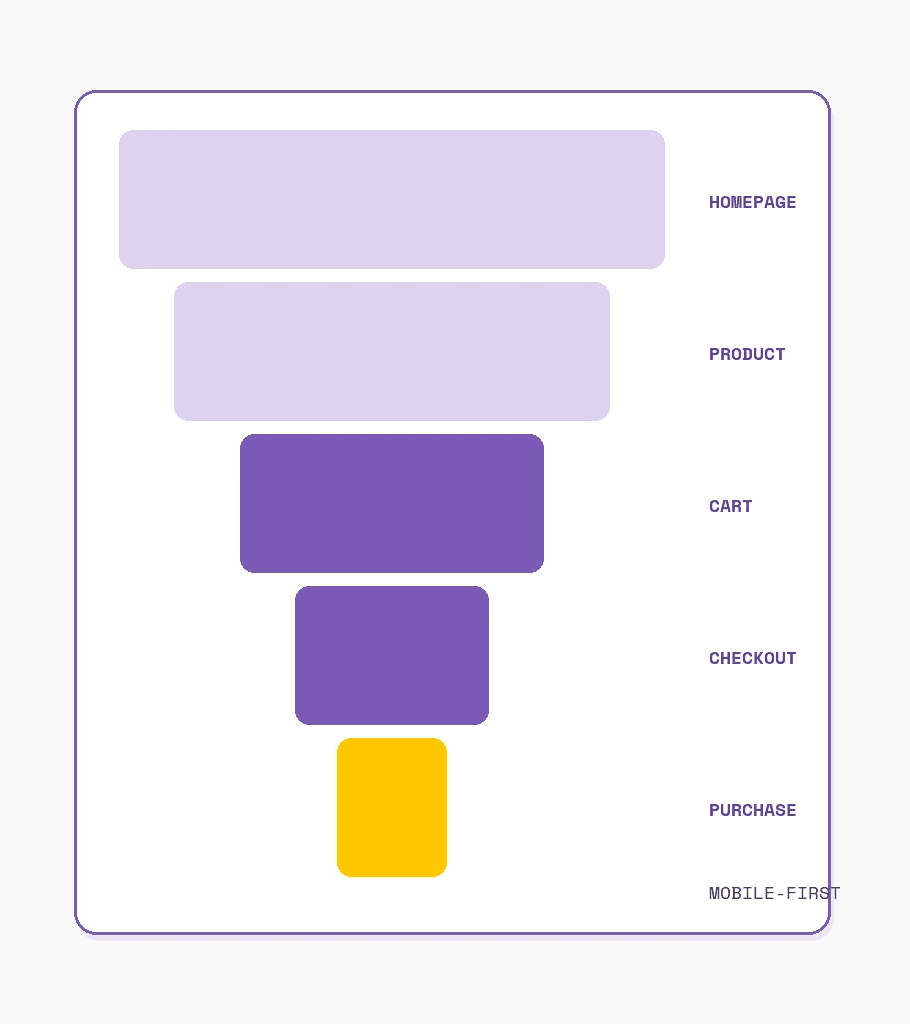
The research plan was defined around the primary business goal of increasing purchase conversion. Key stages of the e-commerce funnel were identified as audit focus areas, including homepage entry points, product discovery, cart, and checkout. Mobile usage was prioritized due to its dominant share in traffic and its critical role in conversion losses. Evaluation criteria were aligned with clarity, friction reduction, and support for purchase decision-making.
Methodologies & Phases
The research plan was defined around the primary business goal of increasing purchase conversion. Key stages of the e-commerce funnel were identified as audit focus areas, including homepage entry points, product discovery, cart, and checkout. Mobile usage was prioritized due to its dominant share in traffic and its critical role in conversion losses. Evaluation criteria were aligned with clarity, friction reduction, and support for purchase decision-making.
Methodologies & Phases
The research plan was defined around the primary business goal of increasing purchase conversion. Key stages of the e-commerce funnel were identified as audit focus areas, including homepage entry points, product discovery, cart, and checkout. Mobile usage was prioritized due to its dominant share in traffic and its critical role in conversion losses. Evaluation criteria were aligned with clarity, friction reduction, and support for purchase decision-making.
Methodologies & phases
The research plan was defined around the primary business goal of increasing purchase conversion. Key stages of the e-commerce funnel were identified as audit focus areas, including homepage entry points, product discovery, cart, and checkout. Mobile usage was prioritized due to its dominant share in traffic and its critical role in conversion losses. Evaluation criteria were aligned with clarity, friction reduction, and support for purchase decision-making.
Methodologies & phases
The research plan was defined around the primary business goal of increasing purchase conversion. Key stages of the e-commerce funnel were identified as audit focus areas, including homepage entry points, product discovery, cart, and checkout. Mobile usage was prioritized due to its dominant share in traffic and its critical role in conversion losses. Evaluation criteria were aligned with clarity, friction reduction, and support for purchase decision-making.
Conclusion
The audit showed that low purchase conversion was driven by accumulated UX friction across the entire funnel rather than isolated usability issues. Mobile users were particularly affected by missing clarity and interruptions at critical decision moments. Addressing these issues through improved information architecture, simplified cart and checkout flow, and mobile-first UX optimization was identified as essential to increasing conversion performance.
Conclusion
The audit showed that low purchase conversion was driven by accumulated UX friction across the entire funnel rather than isolated usability issues. Mobile users were particularly affected by missing clarity and interruptions at critical decision moments. Addressing these issues through improved information architecture, simplified cart and checkout flow, and mobile-first UX optimization was identified as essential to increasing conversion performance.
Conclusion
The audit showed that low purchase conversion was driven by accumulated UX friction across the entire funnel rather than isolated usability issues. Mobile users were particularly affected by missing clarity and interruptions at critical decision moments. Addressing these issues through improved information architecture, simplified cart and checkout flow, and mobile-first UX optimization was identified as essential to increasing conversion performance.
Conclusion
The audit showed that low purchase conversion was driven by accumulated UX friction across the entire funnel rather than isolated usability issues. Mobile users were particularly affected by missing clarity and interruptions at critical decision moments. Addressing these issues through improved information architecture, simplified cart and checkout flow, and mobile-first UX optimization was identified as essential to increasing conversion performance.
Outcome
Conversion priority: a clear UX direction focused on purchase completion was defined.
Cart and checkout improvements: recommendations were delivered to simplify key purchase steps.
Purchase decision clarity: changes were identified to clarify costs, delivery terms, and payment methods.
Mobile UX priority: key mobile flow areas requiring optimization were outlined.
UX action roadmap: a structured set of recommendations ready for implementation and validation was provided.
Outcome
Conversion priority: a clear UX direction focused on purchase completion was defined.
Cart and checkout improvements: recommendations were delivered to simplify key purchase steps.
Purchase decision clarity: changes were identified to clarify costs, delivery terms, and payment methods.
Mobile UX priority: key mobile flow areas requiring optimization were outlined.
UX action roadmap: a structured set of recommendations ready for implementation and validation was provided.
Outcome
Conversion priority: a clear UX direction focused on purchase completion was defined.
Cart and checkout improvements: recommendations were delivered to simplify key purchase steps.
Purchase decision clarity: changes were identified to clarify costs, delivery terms, and payment methods.
Mobile UX priority: key mobile flow areas requiring optimization were outlined.
UX action roadmap: a structured set of recommendations ready for implementation and validation was provided.
Outcome
Conversion priority: a clear UX direction focused on purchase completion was defined.
Cart and checkout improvements: recommendations were delivered to simplify key purchase steps.
Purchase decision clarity: changes were identified to clarify costs, delivery terms, and payment methods.
Mobile UX priority: key mobile flow areas requiring optimization were outlined.
UX action roadmap: a structured set of recommendations ready for implementation and validation was provided.
Case studies
Stories that drive success
From research to execution, we collaborate with businesses to craft experiences that resonate with users and deliver measurable results.


Case studies
Stories that drive success
From research to execution, we collaborate with businesses to craft experiences that resonate with users and deliver measurable results.
CASE STUDIES
Stories that drive success
From research to execution, we collaborate with businesses to craft experiences that resonate with users and deliver measurable results.
Case studies
Stories that drive success
From research to execution, we collaborate with businesses to craft experiences that resonate with users and deliver measurable results.
CASE STUDIES
Stories that drive success
From research to execution, we collaborate with businesses to craft experiences that resonate with users and deliver measurable results.